
Why You’re Not Too Much: Reclaiming Your Worth (2026)
Someone told you that you were too much.
Maybe not with words. Maybe it was the way he pulled back when you got expressive. The way he went quiet when you talked about your goals. The way you started softening your opinions, shrinking your sentences, and calling it ‘being chill’ — when really, you were afraid of being too much to handle.
And somewhere between trying not to need too much and trying not to want too much, you got smaller. Quieter. More agreeable. A little less like yourself.
This post is for her — the woman who has been dimming her light so someone else wouldn’t feel blinded by it. The one who’s been laughing off things that sting, explaining why her standards are reasonable, and privately wondering if maybe the problem really is her.
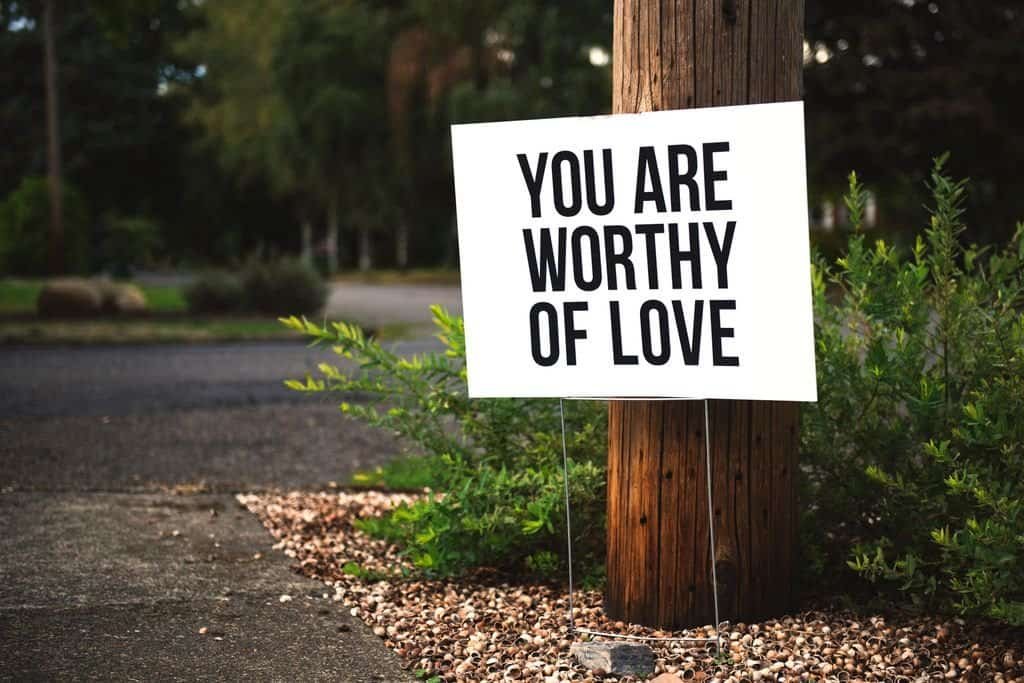
It isn’t. You are not too much. You have simply been in rooms that were too small for you.
Let’s talk about how you got here — and more importantly, how you walk back into yourself.
FREE DOWNLOAD
Know Your Worth Before You Date Anyone
The free Vetting Formula PDF walks you through exactly how to identify your non-negotiables, spot the men worth your time, and stop investing in situations that have no future.

What “Being Too Much” Really Means — And Who’s Saying It
Before we go anywhere, let’s dismantle the phrase itself.
“You’re too much” is not a diagnosis. It is not an accurate description of who you are. It is a reaction — from a man who does not have the capacity to meet your depth, your standards, or your emotional intelligence.
The woman who gets called “too much” is almost always:
✦ Too clear about what she wants — which exposes men who have no idea what they want.
✦ Too emotionally expressive — which unsettles men who are emotionally shut down.
✦ Too ambitious — which threatens men who are comfortable being comfortable.
✦ Too selective — which inconveniences men who want access without investment.
✦ Too self-aware — which makes it harder for an emotionally immature man to project onto her.
“Too much” is what a limited person calls a limitless woman. The right man — a man who is secure, self-aware, and genuinely interested in you — does not experience you as too much. He experiences you as exactly right.
There is a difference between being difficult and being a lot for the wrong person. One is worth examining. The other is a filter — and it is working exactly as it should.
A Note Worth Sitting With
In honesty: there is a version of this that deserves self-reflection. If your emotional expression consistently becomes emotional explosiveness, that is worth examining — not to make yourself palatable for a man, but because you deserve the peace of a regulated nervous system. If your standards are rooted in fear or fantasy rather than genuine self-knowledge, that is also worth exploring.
But the vast majority of women reading this are not the problem. They simply loved someone whose ceiling was the floor they were already standing on.
6 Signs You’ve Been Settling (Even If It Never Felt That Dramatic)

Settling rarely announces itself. It happens in increments — one small compromise at a time — until you look up one day and barely recognise the version of yourself that is still in this relationship.
Here are six signs you have been settling, even if it felt like love:
1. You stopped voicing opinions that might create conflict. You have thoughts, preferences, even strong feelings — but you’ve learned to swallow them. “It doesn’t matter” has become your default, even when it does matter.
2. You’ve been defending your standards as if they require justification. The moment you start explaining why you want consistency, effort, or emotional presence — you’ve already accepted that those things are negotiable. They are not.
3. You’ve been laughing off things that hurt. He makes a careless comment. It stings. You say “I know he didn’t mean it” and move forward. Then it happens again. And again. Until one day you realise you have not felt fully safe in a very long time.
4. You’ve been accepting inconsistency and calling it patience. Sporadic texting. Plans that only materialise when it’s convenient for him. Effort that appears and disappears. You told yourself he was busy. Consistency would have cost him nothing.
5. You’ve been measuring love by the absence of the worst. “At least he doesn’t cheat.” “At least he shows up sometimes.” “At least he’s not abusive.” When ‘at least’ is the bar, the bar is on the floor.
6. You feel relieved — not excited — when he shows up. Relief is not attraction. Relief is the feeling you get when chronic anxiety briefly lifts. That is not love. That is your nervous system managing uncertainty. [INTERNAL LINK: nervous system healing post]
If you recognised yourself in any of these — this is not the moment for shame. This is the moment for honesty. You cannot change what you refuse to name.
What Settling Actually Costs You

We tend to talk about settling as a disappointing romantic choice. But settling is not just about love. The cost goes much deeper.
Your peace. Settling costs you the quiet confidence of knowing you are exactly where you should be. Instead, you get a low-grade anxiety — a constant undercurrent of “Is this enough? Am I enough? Should I stay?” Peace is not a bonus. It is your baseline.
Your time. You cannot get your years back. Every season spent in a relationship that isn’t right is a season not spent building one that is. Not said to induce panic — said to induce clarity.
Your self-concept. This is the deepest cost. When you spend months or years accepting less than you deserve, you begin — unconsciously — to believe that less is what you deserve. Your self-worth bends to fit the relationship. Reclaiming it means actively unlearning what that dynamic taught you about yourself.
Your availability. A woman who is settling is not truly available. She is not emotionally free to meet someone who could actually choose her well. Holding onto the wrong relationship doesn’t just cost you that relationship — it costs you the next one.
Your health. Chronic relational stress has real physiological effects. Elevated cortisol. Disrupted sleep. Persistent anxiety. Your body has been telling you something was wrong long before your mind was willing to listen.

How to Reclaim Your Worth — 5 Practical Steps
Reclaiming your worth is not a one-time decision. It is a daily practice. But it begins with some very specific, very intentional choices.
Step 1: Write your non-negotiables — the real ones. A preference is “I’d love someone tall.” A non-negotiable is “I need someone who is emotionally available, consistent, and actively seeking a committed relationship.” Write the second kind. Be specific. Make them visible. This is the foundation of every good dating decision you will make from here.
Step 2: Stop explaining your standards. You do not owe anyone a rationale for wanting to be treated well. The moment you feel yourself starting to defend your timeline, your expectations, or your need for clarity — stop. “This is what I need” is a complete sentence.
Step 3: Practise receiving — starting small. Most women who have been settling have also been over-giving. They initiate, plan, pursue, and provide the emotional labour because it felt safer than waiting. Begin practising receiving. Let him call first. Let him plan the date. Allow yourself to be given to without immediately reciprocating in equal measure. This is not a game. This is recalibration.
[INTERNAL LINK: How to Receive Love Without Guilt]
Step 4: Audit your environment. The women around you shape your sense of normal. If everyone you know is also accepting less than they deserve, you will not have a reference point for what being fully chosen looks like. Find women — in real life or online — who are operating at the level you aspire to. Their standard will raise yours.
Step 5: Do the nervous system work. If you have spent significant time in emotionally unavailable or unpredictable dynamics, your nervous system has adapted to that environment. You may feel oddly uncomfortable when something is calm and easy, because peace feels foreign. This is the inner work. A therapist, coach, or structured resource can walk you through it. It is not weakness — it is the most important investment you will make in yourself.
[INTERNAL LINK: Nervous System Healing Post
The Man Who Wants All of You
Here is the truth that changes everything:
The right man does not want a quieter version of you. He does not want you edited, softened, or pre-filtered for his comfort. He wants to meet all of you — your ambition, your depth, your standards, your faith, your full emotional range — and he considers it a privilege, not an inconvenience.
He is not intimidated by your clarity. He is drawn to it. He is not exhausted by your standards. He respects them — because he has standards of his own. He does not need you to be less so that he can feel like more.
That man exists. And he is not looking for the version of you that learned to shrink. He is looking for the version of you that is standing fully in herself — with her worth intact and her life fully lived — and he will recognise her immediately when he finds her.
The question is not whether he exists. The question is whether you will be fully present when he arrives.
You Were Never Too Much
You were simply too much for someone who had no idea what to do with a woman of your depth.
Reclaiming your worth is not about becoming harder, louder, or more guarded. It is about becoming more honest — with yourself, about what you need, what you will accept, and who you are when no one is asking you to be less.
Chosen, Not Chasing is not just a brand name. It is a decision. The decision to stop running after what was never chosen for you — and to trust that what is meant for you will find you when you are standing fully in yourself.
You don’t need to earn being chosen. You need to stop convincing people who aren’t choosing you.
Start there. Everything else follows.
FAQ: Self-Worth After Settling
How do I know if I’ve been settling — or if I just have unrealistic expectations?
The difference lies in what you are asking for and why. Unrealistic expectations often come from fear or fantasy — wanting a perfect man who never disappoints you. Healthy standards come from self-knowledge — needing a man who is emotionally available, consistent, and genuinely investing in you. If what you’re asking for is basic respect, consistency, and honest communication, those are not unrealistic expectations. Those are minimum requirements. If a man frames your non-negotiables as ‘too demanding’, that is information about him — not a correction for you.
Can I reclaim my worth while staying in the relationship?
Sometimes, yes — especially if the relationship has genuine foundation and both people are willing to grow. But you have to be honest: is the relationship keeping you small, or have you been keeping yourself small within it? Reclaiming your worth may mean having conversations that change the entire dynamic. Some relationships will rise to meet that. Some will not survive it. Either outcome is better than a lifetime of staying silent about your needs.
I’ve been settling for years. Is it too late to start over?
It is never too late. Women have rebuilt their sense of worth at 29, at 38, at 52 — and gone on to attract the most beautiful relationships of their lives. The question is never “is it too late.” The question is “am I willing to do the work.” If your answer is yes, you are already further along than most people ever allow themselves to be.
How long does it take to rebuild self-worth?
There is no fixed timeline, but there are things that consistently accelerate the process: holding consistent boundaries — which builds self-trust over time; surrounding yourself with women who operate at a higher standard — which recalibrates your sense of normal; and doing the inner work through therapy, coaching, or structured resources like The Prize Mindset. Some women feel a significant internal shift within weeks. For others it takes months of steady, intentional practice. Every step compounds.
What if I don’t know what my standards actually are?
That is exactly where to start. Many women who have been settling have been so focused on making the relationship work that they never stopped to ask what they actually need from one. The free Vetting Formula PDF walks you through this — it gives you the framework to get clear on your non-negotiables before you invest your heart in another situation. Download it below.